 Newest in Composition
Build a Drum Groove for Your Game Cue
Build a clear drum groove for a game cue with a 16-step grid, sparse and active variations, a practical fill, and a loop check.
Read the guide →

Build a Bass Line That Carries Your Game Cue
Build a bass line over fixed chords with a four-bar MIDI worksheet, a drum-aware rhythm, and a clear check for the game-loop seam.
Read the guide →
Write a Horror Game Cue That Builds Dread
Build a short horror game cue in two versions: one for an unseen threat and one for its reveal, with playable notes and a listening checklist.
Read the guide →
Plan Your First Game Score, One Cue at a Time
Use a cue list to plan your first game score, choose a shared musical palette, and review each sketch against the playable game.
Read the guide →
Compose an Ambient Soundscape for Your Game
Build ambient game music with a clear scene brief, a three-layer cue, gentle automation, and practical checks for dialogue, effects, and loops.
Read the guide →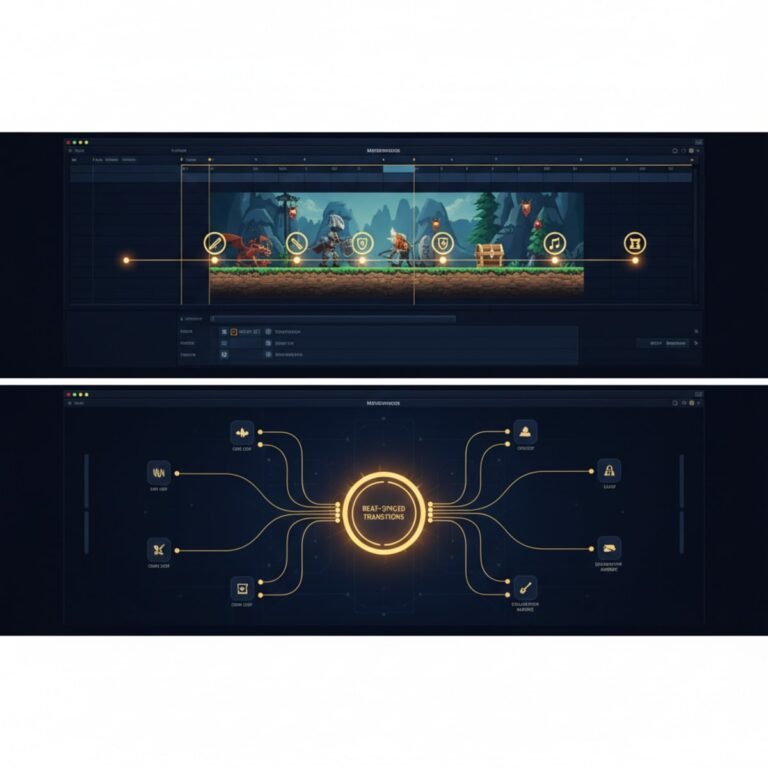
How to Sync Music to Gameplay: Tempo, Hits, and Timing Guide
Learn how to sync music to gameplay using tempo, cues, and adaptive music tools. Explore composer workflows and avoid timing issues. Step into pro game audio.
Read the guide →
Leitmotif Writing: Evolving Character Themes in Game Music
Learn how to write leitmotifs that evolve with the story. See techniques, top soundtracks, and practical tips for adaptive game music. Read more now!
Read the guide →
Adaptive Music in Video Games: How Interactive Soundtracks Work
What adaptive music is, how vertical layering and horizontal re-sequencing work, and how to compose your first interactive game score.
Read the guide →