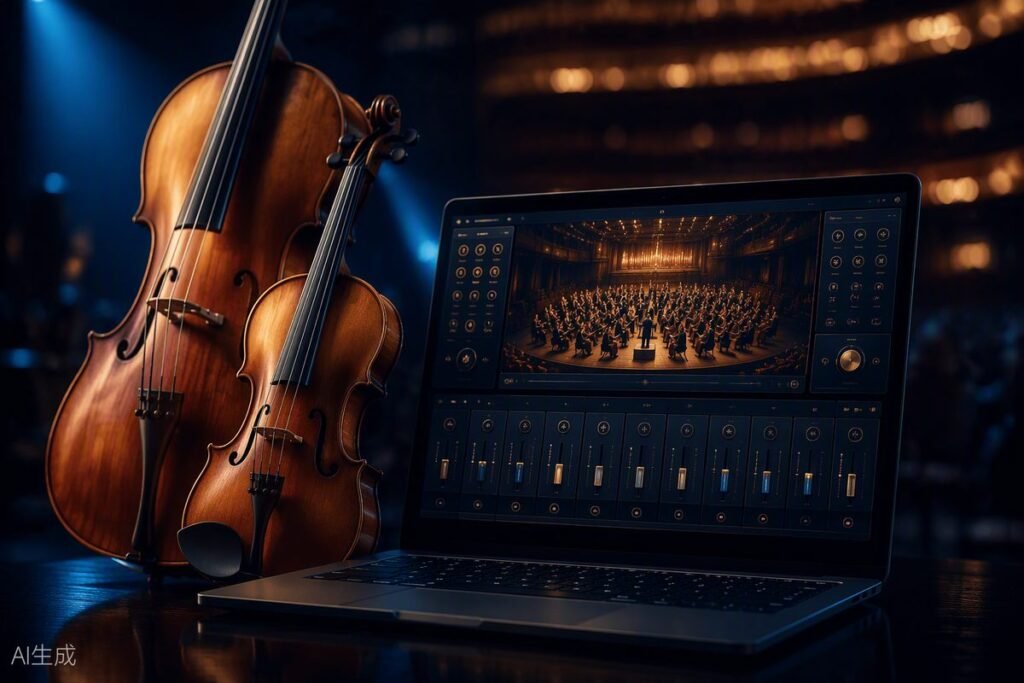
Orchestral sample libraries are the game composer’s orchestra-on-a-hard-drive — and the market is a minefield of $800 boxes marketing “Hollywood sound” to people who don’t need it yet. This guide organizes the landscape by budget, so you can spend exactly what your current career stage justifies and not a dollar more.
Transparency note: some links on this site are affiliate links — see our affiliate disclosure. Our rankings are based on hands-on use and community consensus, not commission rates.
How We Judged These Libraries
- Sound per dollar: what you actually get at each price point.
- Playability: legato quality, keyswitch logic, and how fast you can write with it.
- Resource footprint: RAM and disk demands matter when your template has 200 tracks.
- Game-music fit: versatile, layer-friendly sounds beat one-trick “epic” libraries.
Free Tier: $0 (Seriously Good)
Spitfire LABS
An entire ecosystem of free instruments — strings, brass, pianos, drums, textures — recorded with real care. LABS instruments are simple (few articulations, fixed mixes) but musical, and they’re perfect for sketching and for ambient/emotional cues. Every beginner should install LABS before buying anything.
BBC Symphony Orchestra Discover
A full orchestra — strings, woodwinds, brass, percussion — for around $49 (and occasionally free during promotions, in exchange for a survey and a wait). The sound is a real recorded BBC orchestra, streamlined into light presets. For the price of a pizza, Discover can score an entire indie game credibly.
ProjectSAM The Free Orchestra / Soni Musicae & VSCO 2 CE
The Free Orchestra offers cinematic ensemble patches; Versilian Community Edition (VSCO 2 CE) is an open-source full orchestra. Both are genuinely usable, especially layered under a stronger lead library.
Mid Tier: $100–$400 (The Sweet Spot)
Spitfire BBC SO Core
The step up from Discover: more articulations, more mic control, same great room. Frequently discounted during Spitfire’s seasonal sales — patience typically saves 30–40%.
Cinematic Studio Series (CSS)
Cinematic Studio Strings is widely considered the reference for lush, romantic string tone at a mid-tier price. If your music leans emotional and melodic, CSS punches far above its cost. Its siblings (brass, woodwinds, percussion) maintain the standard.
8Dio / Soundiron / Heavyocity sales-bin picks
These catalogs run deep discounts constantly. Focused purchases — a great solo instrument, a percussion library, a choir — often serve game composers better than one expensive “everything” box.
Flagship Tier: $500+ (Buy When Clients Pay for It)
Spitfire BBC SO Professional / Orchestral Tools / Cinesamples
At this level you’re buying mic positions, every articulation, and mix-ready depth. These libraries power shipped AAA and streaming-media scores — but they demand 32–64 GB of RAM, fast SSDs, and mixing skill to justify their cost. None of them will fix weak composition; all of them will reward strong composition.
Specialty Libraries Game Composers Love
| Need | What to look for | Why |
|---|---|---|
| Hybrid/trailer percussion | Damage-style cinematic drums | Combat layers and boss fights |
| Choir | Word-builder or phrase libraries | Fantasy and sacred atmospheres |
| Ethnic/world colors | Duduk, erhu, frame drums, kotos | Instant sense of place for game worlds |
| Chiptune/retro | Authentic chip emulators & bit packs | Retro-styled indie games |
| Synths | One flagship synth (e.g., a wavetable workhorse) | Hybrid and sci-fi scoring |
A Sensible Buying Strategy
- Start free: LABS + BBC SO Discover. Write twenty tracks with them.
- First purchase: one mid-tier library that matches your style (CSS for emotion, BBC SO Core for all-round orchestral work) — bought on sale.
- Fill gaps by project: let each paid gig fund the one library that gig actually needs.
- Flagship last: upgrade when your income and your machine both justify it.
Libraries are tools, not talent. A $49 orchestra in the hands of someone who understands modes, ostinatos, and layering will beat a $2,000 template every time. Pair your sounds with the right DAW — see our DAW comparison — and go write something.
🎛️ Gear mentioned in this guide
- MIDI keyboard: Akai MPK Mini MK3 — best budget pick for composers
- Headphones: Audio-Technica ATH-M50x — honest mixing reference
- Interface: Focusrite Scarlett 2i2 — clean recording, zero fuss
As an Amazon Associate we earn from qualifying purchases. Full list on our Recommended Gear page.